
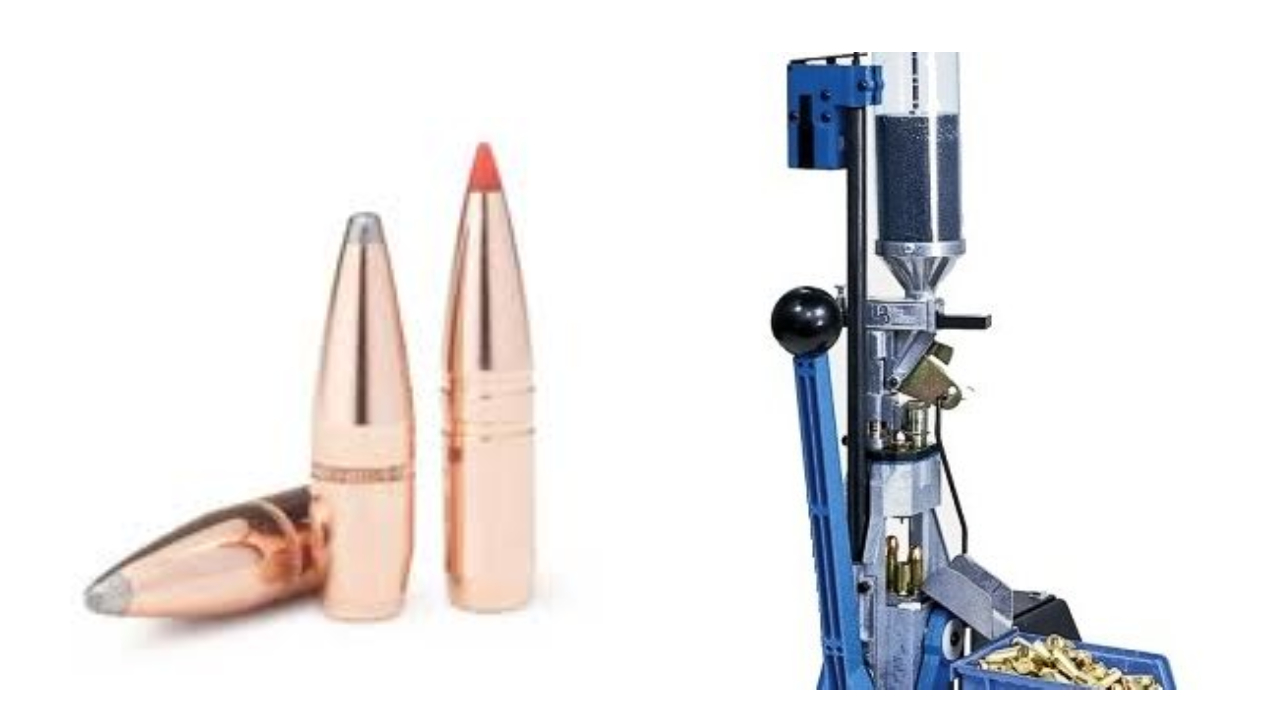
One of the most frustrating parts of handloading is investing the time to build a batch of ammo, getting to the range, and realizing your groups still are not where they should be. You followed your process carefully and on paper everything looks right, yet the results do not reflect the effort.
When that happens, most reloaders immediately look at the obvious variables such as powder charge or bullet selection. Sometimes those factors play a role, but more often the real issue is not a single clear mistake. It is something much less obvious and far easier to overlook.
Inconsistent groups are rarely caused by one major error. They are usually the result of small variations that build on each other throughout the loading process. Slight differences in brass preparation, inconsistent neck tension, minor bullet runout, subtle changes in seating depth, or uneven case trimming may not stand out on their own. When combined, however, they introduce enough variation to show up clearly on target.
That is what makes this stage so frustrating. Nothing appears wrong, yet something is clearly off.
The good news is that these issues are almost always fixable once you know where to focus. Tight groups do not come from chasing a perfect powder charge alone. They come from controlling every variable you can. The more consistent each round is from case to case, the more your rifle can perform the way it was designed to.
As you begin eliminating those small inconsistencies, the results become noticeable. Groups tighten, flyers become easier to explain or disappear, and you start to see what your rifle and your load are truly capable of.
Inconsistent Brass Prep Is One of the Biggest Causes
A lot of reloaders focus heavily on powder and bullets but do not realize how much brass preparation affects accuracy. If your cases are not uniform, your loads are not truly uniform either.
Mixed brass is one of the most common reasons groups open up. Different manufacturers can have different internal case capacities, wall thicknesses, and hardness. Even if everything else stays the same, that can slightly change pressure and velocity from round to round. If you are chasing tighter groups, sorting brass by headstamp is one of the easiest places to start.
Case length matters too. If your brass is not trimmed consistently, crimp and neck tension can vary, which affects how the bullet releases. That changes pressure and can create unpredictable results downrange.
Uneven primer pockets, inconsistent flash holes, and brass that has been worked unevenly over multiple firings can also contribute more than many reloaders expect.
Neck Tension Problems Can Ruin Otherwise Good Loads
Neck tension does not always get enough attention, but it plays a huge role in accuracy. If some bullets seat with noticeably more resistance than others, that is a sign your neck tension is not uniform. When neck tension varies, the force required for the bullet to start moving changes from round to round. That can affect ignition, pressure, and ultimately consistency.
This is why sizing setup matters. Your sizing die, expander ball, and brass condition all affect neck tension. Overworked brass, inconsistent annealing, or an expander dragging unevenly through the neck can create subtle differences that show up on paper.
A lot of reloaders do not realize that their process “feels” inconsistent until they slow down and pay attention during seating. If one bullet glides in and the next one takes more force, your ammo is already telling you something is off.
Seating Depth Can Change More Than You Think
Even if your powder charge is perfect, poor seating depth consistency can still hold you back.
Bullet jump to the lands matters, and some rifles are much more sensitive to it than others. If your seating depth varies more than you realize, or if you never tested different seating depths at all, your groups may stay mediocre no matter how carefully you measure powder.
This is especially true when using bullets and rifles that tend to reward fine tuning. A load that is “safe and functional” is not always the same as a load that is optimized for precision.
That does not mean every reloader needs to chase the lands aggressively, but it does mean that seating depth should be intentional. Consistency matters and testing small adjustments can sometimes tighten groups dramatically without changing anything else.
Bullet Runout Can Quietly Open Up Groups
Bullet runout is one of those problems that many reloaders do not notice until they specifically check for it. A round can look fine to the eye but still have the bullet seated slightly off center. That means the bullet does not enter the bore perfectly aligned, which can hurt accuracy.
Runout often comes from die alignment issues, poor seating stem fit, inconsistent case necks, or problems introduced during sizing and seating. It is not always severe enough to matter for casual shooting, but if you are trying to tighten groups, it becomes much more important.
This is one reason quality dies and good setup matter so much. If your process is introducing crooked seating, you can chase load data all day and still miss the real problem.
Powder Charges Need to Be Consistent, Not Just “Close Enough”
Yes, powder still matters. But the key is not just choosing a good charge weight. It is making sure your actual thrown or weighed charges are consistent from round to round.
A load that varies more than you think can create velocity spreads that show up as vertical stringing or just generally looser groups. If your measure is not throwing consistently, your scale process is sloppy, or you are rushing the rhythm of your loading, you may be introducing enough variation to matter.
This is especially true when loading precision rifle ammunition, where small changes can show up quickly at distance.
Sometimes the Problem Is Not the Load at All
It is easy to assume that wide groups automatically point to a flaw in your reloads. In reality, not every accuracy issue starts at the reloading bench. Even well-built ammunition can produce disappointing results if something else in the system is off.
Small mechanical or environmental factors can have a surprisingly large impact. A scope that is slightly loose or not tracking consistently can shift your point of impact. Action screws that are not properly torqued can affect how the rifle sits in the stock. Barrel fouling can change how rounds behave as the session progresses. Even something as simple as an inconsistent shooting position or unstable rest can introduce enough variation to open up groups.
Environmental conditions matter as well. Wind, temperature, and light can all influence what you see on target, sometimes in ways that are easy to underestimate in the moment.
Before you start changing your load, it is critical to confirm that your rifle and shooting setup are stable and repeatable. Eliminating these external variables gives you a clear baseline and prevents you from chasing problems that are not actually coming from your ammunition.
At the same time, there is a simple reality check. If factory match ammunition consistently produces tighter groups than your reloads in the same rifle under the same conditions, that is a strong indicator that something in your process needs attention. Factory match ammo is built to a high standard, but it is still generalized. If it is outperforming your handloads, there is likely an opportunity to tighten up your consistency and get more out of your setup.
The key is understanding where the problem actually starts. Accuracy is the result of the entire system working together, not just the load alone.
Improve Your Reloads with Titan Reloading
If your reloads are not grouping the way they should, the issue is rarely one obvious failure. More often, it is a collection of small inconsistencies that quietly add up and show up on target. Variations in brass prep, uneven neck tension, slight seating depth differences, bullet runout, and inconsistent powder charges may seem minor on their own, but together they can hold your rifle back from performing at its true potential.
The shooters who consistently produce tight groups are not chasing shortcuts or guessing at solutions. They are building a process that removes variables at every step. They prep brass the same way every time, control neck tension with intention, seat bullets with repeatable precision, and verify their setup instead of assuming it is correct. That level of control is what turns average reloads into predictable, high-performing ammunition.
The goal is not just to produce rounds that function. The goal is to produce rounds that behave the same way every time you pull the trigger. When your process becomes more consistent, your results follow. Groups tighten, flyers become less frequent, and your confidence in every shot increases.
That is where Titan Reloading comes in. At Titan Reloading, we provide the tools, dies, and components that help reloaders eliminate those small but critical inconsistencies. From precision dies that improve alignment and seating consistency to reliable components that support uniform performance, the right equipment makes it easier to build ammunition you can trust.
If you are ready to move beyond trial and error and start producing truly consistent handloads, now is the time to upgrade your process.
Visit Titan Reloading today to explore reloading equipment designed for accuracy, consistency, and real-world performance, and start building ammo that delivers tighter groups every time you step up to the line.