
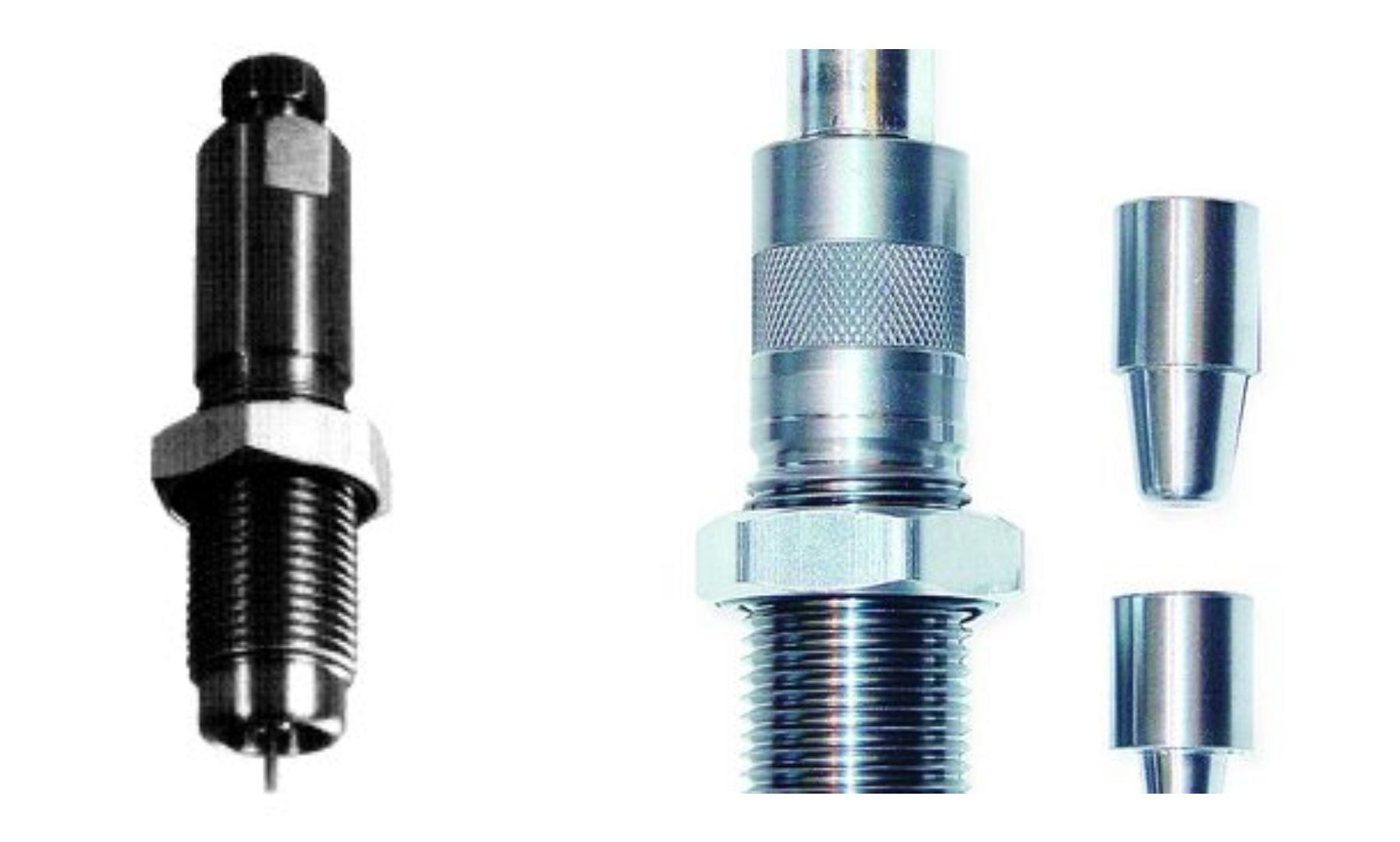
Resizing is one of the most important steps in preparing fired rifle brass for another loading cycle. Once a cartridge is fired, the case expands to fit the chamber, and some form of resizing is usually needed before that brass can be used again. For many rifle reloaders, the decision comes down to two common approaches: full-length sizing and neck sizing.
Both methods have legitimate uses, but they are not interchangeable, and neither one is automatically better in every situation. Full-length sizing is generally favored when dependable chambering matters most, especially when ammunition may be used in more than one firearm. Neck sizing reduces how much the case body is worked, but it is most appropriate in a narrower set of applications involving brass fired in the same bolt-action rifle. Understanding the difference helps you choose a method based on reliability, firearm type, brass life, and shooting goals rather than on old assumptions about which technique produces the best accuracy.
What Full-Length Sizing Does
Full-length sizing reshapes more than just the neck of a fired case. It brings the case body and shoulder back toward dimensions that allow the cartridge to chamber reliably again, which makes it the standard choice when ammunition may be used in more than one firearm of the same cartridge and for semi-automatic, lever-action, pump-action, and hunting rifles, where dependable feeding matters more than minimizing how much the case is worked.
The key advantage is predictability. Properly sized brass is far less likely to become difficult to chamber as firing cycles accumulate. That does not mean brass should be resized more aggressively than necessary. Working the case further than the chamber requires contributes to unnecessary stretching and shortens useful brass life, so correct die setup still matters, and reloaders should follow their die manufacturer’s instructions and published reloading guidance carefully.
What Neck Sizing Changes
Neck sizing reduces the diameter of the case neck so it can hold another bullet while leaving most of the fired case body relatively unchanged. Because the body remains closer to the shape of the chamber it was fired in, the case stays closely fitted to that one chamber, and the brass is worked less with each cycle. Collet-style neck dies, which squeeze the neck against a mandrel rather than pulling it over an expander ball, also skip case lube entirely and tend to produce very consistent neck tension.
Those are real advantages, and they are why neck sizing has long been popular with bolt-action shooters loading for a single rifle. What has changed is the assumption that neck sizing is the only path to precision ammunition. A full-length die adjusted to move the shoulder only a very small, measured amount can deliver the same consistency with more reliable chambering, so neck sizing is best viewed as a specialized technique that fits certain rifles well, not as a universal accuracy upgrade.
Reliability Is the Biggest Practical Difference
The most noticeable difference between the two methods shows up when ammunition is chambered. Full-length sized brass provides more clearance because the body and shoulder have been resized, and that clearance becomes important when ammunition is exposed to dirt, temperature changes, rapid firing, or rough handling through a magazine. Neck-sized brass stays closely fitted to the chamber it was fired in, and after repeated firing cycles the case body can continue expanding until closing the bolt takes noticeably more effort.
For a shooter firing a bolt-action rifle from a bench, slightly tighter chambering may be manageable. For a hunter who needs a cartridge to chamber quickly under field conditions, it is an unnecessary disadvantage.
Neck Sizing Works Best With One Specific Rifle
The most important limitation of neck sizing is that the brass should stay dedicated to the firearm it was fired in. Two rifles chambered for the same cartridge can have slightly different chamber dimensions, and a case formed in one chamber may not fit the other if only the neck has been resized. Reloaders who own multiple rifles in the same caliber must keep neck-sized brass separated by firearm with careful labeling.
Full-length sizing is the more practical approach whenever ammunition may be shared between rifles or when the brass history is uncertain, which is also why it is the right choice for the first loading of any brass that was not fired in your own rifle.
What Controlled Full-Length Sizing Actually Means
When experienced reloaders talk about controlled full-length sizing, they are usually talking about shoulder bump. A bottleneck rifle case seats in the chamber on its shoulder, and the distance from the bolt face to that seating point is the chamber’s headspace. Every time the case is fired, the shoulder moves forward to match the chamber. Screwing a full-length die down until it hits the shell holder pushes that shoulder back much farther than the chamber needs, which is what overworks brass. Instead, the goal is to push the shoulder back only enough to restore easy chambering.
In practice this means measuring a fired case with a headspace comparator, a small insert that clamps to a caliper and reads the shoulder position, then adjusting the die a little at a time until sized cases measure a small, consistent amount shorter than the fired ones. The exact amount depends on the rifle and the die, and your die manufacturer’s instructions will tell you how to work toward it. Once the die is locked in that position, you get the body and shoulder clearance of full-length sizing with very little of the brass movement neck-size advocates are trying to avoid. Good measuring tools make this setup repeatable rather than a matter of feel.
Die Types That Support Each Approach
The choice between methods is largely a choice between die types, and knowing what each one does makes the decision clearer. A standard full-length die set, such as a Lee PaceSetter set, sizes the body, shoulder, and neck in one stroke and is the default for hunting rifles, semi-autos, and anyone loading for more than one gun. A collet neck die, such as the Lee Collet die, sizes only the neck against a mandrel and is meant for brass fired in the same bolt-action rifle.
Between those two sit bushing-style dies. A full-length bushing die, such as the Redding Type S, sizes the body and shoulder like a standard die but lets you select the neck bushing, so you control neck tension precisely without giving up chambering reliability. A body die sizes only the body and shoulder and is often paired with a neck die by shooters who want to neck size most of the time and bump the shoulder only when chambering starts to tighten. Titan’s die selection FAQ walks through how these options line up with different rifles.
Full-Length Sizing Makes More Sense for Semi-Automatic Rifles
Semi-automatic rifles place different demands on ammunition. Cartridges must feed, chamber, fire, extract, and cycle without the shooter controlling each step, so full-length sizing is the appropriate approach for these platforms, and the same applies to lever-action and pump-action rifles. Minimizing sizing at the expense of function offers no practical advantage when the firearm depends on consistent cartridge dimensions to operate.
Brass Life Depends on More Than the Sizing Method
Neck sizing is often promoted as a way to extend brass life, and working less of the case does reduce mechanical stress. Sizing method is only one factor, though. Chamber dimensions, pressure, brass quality, firing history, and die adjustment all influence wear, and a poorly adjusted full-length die works brass far more than a well-adjusted one. Inspect cases regularly regardless of method. If a case shows a bright ring above the web or takes noticeably less effort to prime, the sizing method is not the problem, and that case should be retired.
Choosing the Method Based on How You Shoot
Consider a reloader with a single bolt-action .308 who has been neck sizing with a collet die for five loadings. Groups have been good and the brass has needed almost no trimming. On the sixth loading, the bolt starts closing with noticeable resistance. Nothing is wrong with the method. The case bodies have simply grown to the point where the chamber needs some clearance back. A pass through a body die or a full-length die set for a minimal shoulder bump restores easy chambering, and neck sizing can resume for the next few cycles. That is the pattern neck sizing is built around: a dedicated rifle, brass that never leaves it, and a plan for the day the bolt gets stiff.
A hunter who may need a fast second shot in cold weather, a high-volume semi-automatic shooter, or someone loading for multiple rifles in the same cartridge is better served by full-length sizing from the start. A precision bolt-action shooter with brass dedicated to one rifle can reasonably choose either, and many now prefer a full-length or full-length bushing die set for a light shoulder bump because it delivers the consistency they want without the periodic stiff-bolt correction. The important point is that resizing should match the firearm and the application, not an assumption about which technique is more advanced.
Frequently Asked Questions
Does neck sizing always produce better accuracy?
No. Neck sizing has traditionally been associated with precision rifle shooting, and collet-style neck dies do produce very consistent neck tension, but that alone does not guarantee smaller groups. Brass preparation, die setup, bullet seating, and the firearm itself all influence accuracy, and a full-length die adjusted for a minimal shoulder bump can match neck-sized consistency in most rifles.
Can neck-sized brass be used in another rifle of the same caliber?
It may not chamber properly, because the case body was formed to a different chamber. Brass that will be used in more than one rifle should be full-length sized.
Does full-length sizing wear brass out faster?
It works more of the case, but brass life depends heavily on how far the die pushes the shoulder back. A full-length die adjusted to bump the shoulder only a small, measured amount does not dramatically shorten case life compared with neck sizing.
Is neck sizing appropriate for semi-automatic rifles?
No. Semi-automatic, lever-action, and pump-action rifles need the chamber clearance that full-length sizing provides for reliable feeding, chambering, and extraction.
Can a reloader switch from neck sizing back to full-length sizing?
Yes. Neck-sized brass will eventually need its shoulder pushed back when chambering tightens, either with a body die or a full-length die, and can then return to neck sizing. Follow the die manufacturer’s instructions when making the adjustment.
Choose the Sizing Method That Fits the Application
Full-length sizing and neck sizing each have a place in rifle reloading, but they solve different problems. Full-length sizing offers broad reliability across rifles and conditions. Neck sizing reduces how much the case body is worked when brass stays dedicated to one bolt-action rifle, provided there is a plan for bumping the shoulder back when chambering tightens. For many reloaders, a full-length die set for a light, measured shoulder bump is the best balance of consistency and dependable chambering.
At Titan Reloading, we believe better reloading starts with understanding why each tool and technique is used. Whether you are setting up a first rifle reloading bench or refining an established precision workflow, the right reloading dies, measuring tools, brass preparation equipment, and dependable accessories help you build a more consistent process.
Explore Titan Reloading’s selection of reloading equipment from trusted manufacturers, and choose the tools that match your rifle, your shooting discipline, and the way you actually reload.